

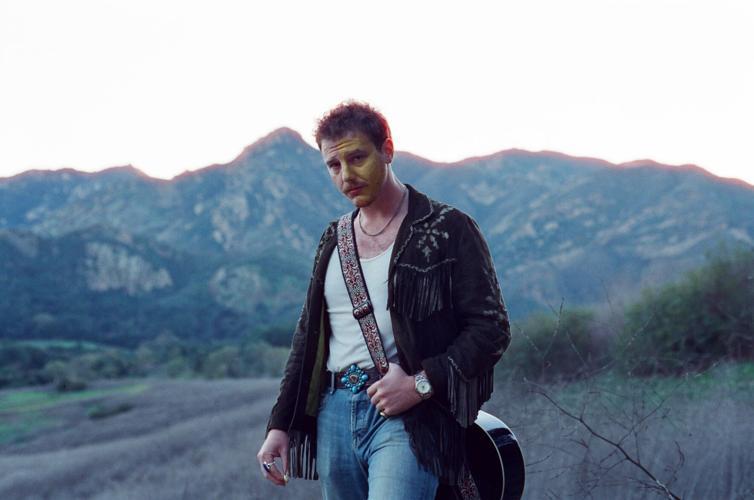

Drawing from folk traditions while bending them toward surrealism, humor, and existential reflection, August Gladstone’s album, The Golden West, was built from personal experience, literary influence, and the symbolic weight of American mythology. The album explores the tension between expectation and reality, dream and disillusionment.
In this Creative Spotlight conversation, August reflects on writing between tradition and modernity, building a world through imagery and metaphor, and exploring the deeper tensions at the heart of The Golden West.
This interview has been edited for clarity and flow.
Originally published on Creating Romancivity.
Between Tradition and Personal Voice, Myth and Disillusionment
August Gladstone’s work exists in a space that constantly shifts between the inherited and the invented. His songwriting draws from tradition, but never feels confined by it, instead using it as something to reshape, question, and move beyond.
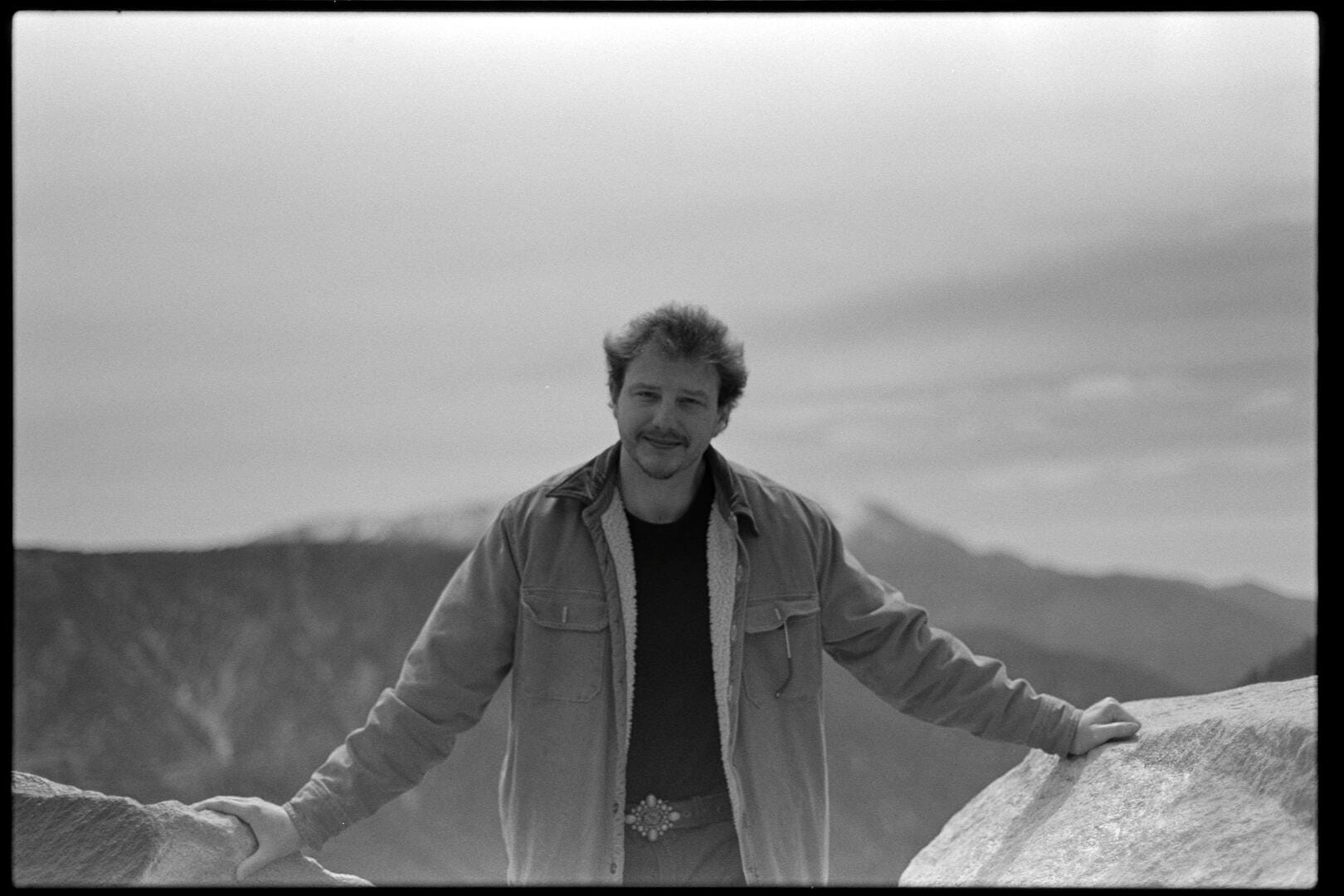
Your work is rooted in older folk traditions, but also very surreal and modern. How do you balance your music existing in that space between past and present?
AG: Folk music carries a human core – a lineage of tradition, cultural memory – regardless of how you express it. At the same time, an artist’s work is to recontextualize their lived experience – the traditions they’ve internalized. I love folk music because it allows for the recontextualization of cultural experience through personal ones. For my work, which is grounded in its lyricism, I twist folktales towards modernism without losing their core. I’m deeply inspired by the folk revival, the psychedelic revolution, and the history of wandering troubadours (from Texas to medieval Europe). I try to land somewhere between tradition, absurdity, and perspective.
You’ve written for other artists as well, so how does writing for others compare to writing something as personal and stylized as your own work?
AG: It’s a balancing act. I try to bring my personal style to everything I write (I imagine that’s what makes folks want me to write for them) and intertwine it with their style, their melody, their ideas. I love collaborating with other artists; it’s a privilege and a joy to build something in tandem. Ensuring a line of communication is paramount so that everyone gets what they want out of the partnership and the project is the best that it can be.
When I’m writing lyrics for someone else, I focus on the building blocks – language use and internal rhyme schemes that are transmissible across songs. When I’m writing for myself, I’m able to get a bit more lyrically experimental. I delve into stranger creative corners and embrace more cinematic, imagistic language within said poetic structure.
Across The Golden West, mythology is not treated as something distant or romanticized, but as something active and deeply tied to personal experience. The album uses familiar imagery to question the very narratives it comes from.
The Golden West pulls heavily from Western imagery and mythology. What drew you to that world as the foundation for this album?
AG: The Golden West arrived via a few avenues. A core concept of the album grew from my post-college exodus. I sojourned West following a dream and quickly learned, through a protracted existential crisis, how fragile those are. The West is an anglerfish luring seekers into its jaws with promises of riches, fame, happiness – everything golden. How can there be darkness in the golden land? How do we live meaningful lives in that hungry crucible? It’s a story of existentialism, of how dreams and expectations both serve and disrupt one’s life. The traditional Western myth is a perfect embodiment of that dissonance. You’ve got square-jawed heroes driven by manifest destiny, implacably thirsting for adventure, immune to failure, draped over a lawless, violent, unfair setting. We’re supposed to ignore the vulgarity of the world by holding faithful to these mythical idols.
On a less metaphorical level, I did a solo road trip through the badlands of several Western states last year, pulling off to enjoy massive, solitary swaths of deserts, mountains, and plains. I was incredibly inspired by America’s majesty, the ancient stories steaming off the Earth like a fog of ghosts. I was tearing through pulp Western novels from the 60s and listening to a ton of Townes Van Zandt, really sinking into his musical poetry. I wrote like a fiend on that trip, building those experiences and inspirations into The Golden West.
The Golden West also seems to question the stories we tell about America. What do you think those myths give people, and what do they obscure?
AG: There’s never been a more important time to question the myth of America. These myths have given the country carte blanche to enact a terrible history of bloodshed, one that’s ongoing. Historical American myths are so often rooted in power fantasy, in divine/moral right, and the assurance that we are the good guys. It circles all the way back to the Western tales I mentioned. This country is a golden-plated shadow. These stories give people comfort, security, and a strong self-belief, but in so doing, they obscure the violence, the inhumanity, and the truth behind it all. As America slips deeper and deeper into fascism, as our culture becomes one of instant gratification and mental dissolution, interrogating our ingrained beliefs is of paramount importance. It’s a major reason why I made The Golden West.
Playing With Language, Imagery, and Expression
At the center of August’s work is a love of playing with language, which is reflected in his lyrics and how they rarely describe something directly; instead, they build images that invite interpretation, creating a space where meaning is fluid instead of fixed.
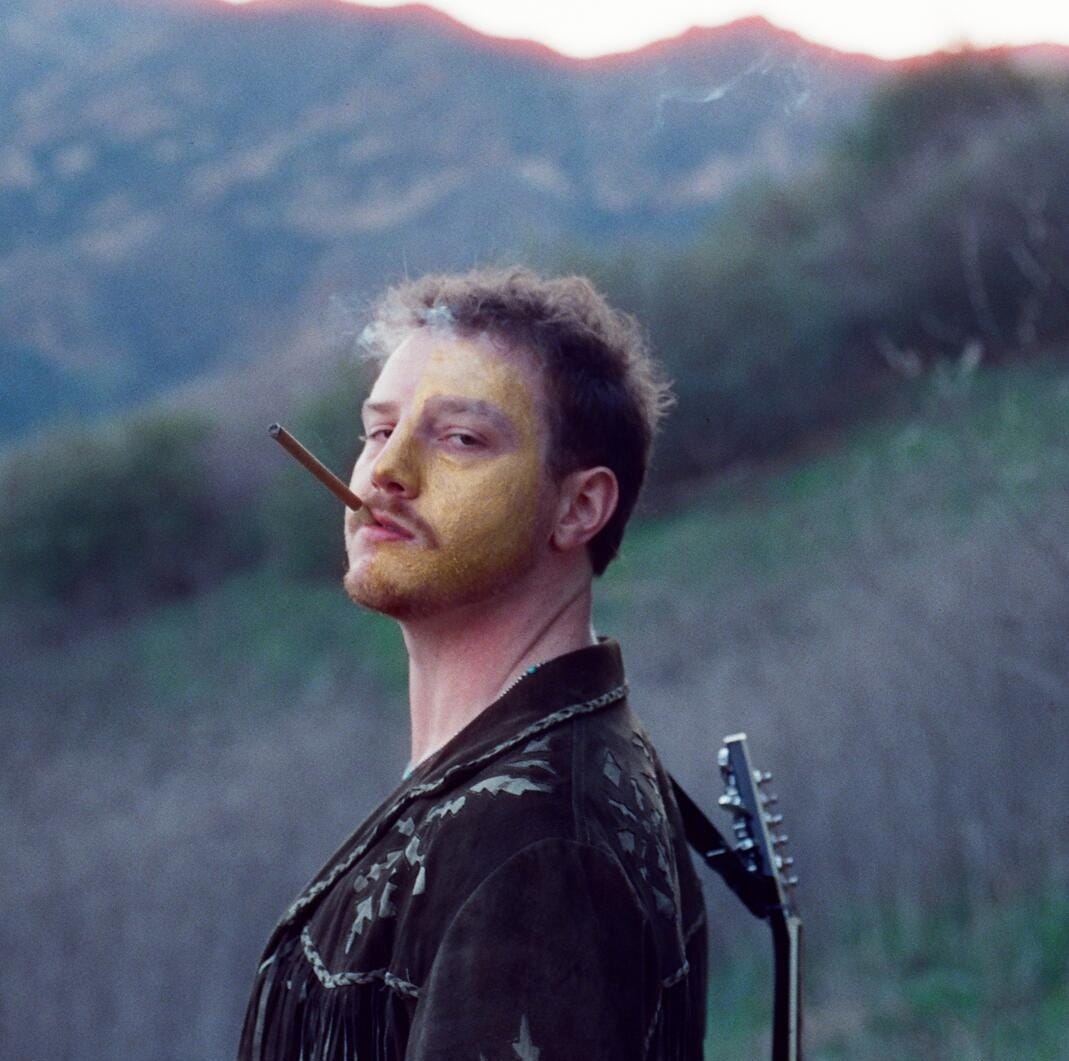
You’re also releasing a companion poetry book. How do the written and musical versions of your work differ or allow you to express yourself differently?
AG: Yes! The big difference, to me, is in their ownership. The lyrics, when read, are open to one’s own interpretation, one’s own tone. Poetry is very intimate for that reason. The writer’s voice is tangled up with the reader’s in a kind of linguistic courting ritual. The musical versions are mine. August’s definitive expression of the words. Both are valuable and serve the work differently. One version offers the words, the other presents them. They’re born from the same place, but they have different effects. The book is forthcoming from Finishing Line Press in 2027!
And speaking of lyrics, what inspired the structure for Prayer for the Traveler, and would you like to break down the lyrics?
AG: If I remember correctly, I wrote the lyrics for Prayer on a Stairmaster in the Beverly Hills LA Fitness. It was written as a poem long before I had designs to turn it musical. Its repetitive structure invokes the feeling of a liturgical chant. I’m fascinated with how faith informs storytelling. Offering up a prayer for these mismatched archetypal characters is meant to bond us together, to inspire love, understanding, and equality on all levels, for the true great challenge in life, for everyone, is living it. I really like what we did sonically. The chant-like structure lulls you into comfort, with the keys and harmonica slowly building anticipation before the hellfire breakdown at the end makes it all explode.
And Talkin’ Wild West mixes humor, chaos, and critique of the American myth. How much of that song is rooted in personal perspective vs. cultural commentary?
AG: It’s a mix of both. It’s the most “modern” song on the album in subject matter. Structurally, it follows the path of the road trip I mentioned earlier, drawn from my notes. The song both embraces and critiques the cowboy aesthetic as well as the tall-tale braggadocio of Western myths. It implies the death of the cowboy at the hands of modernity while also searching for the core of that lifestyle and how it can be reformed to fit today’s world. I’m not a “real” cowboy. I’m a poet from New York. But in that admission, I feel myself get a lot closer to that cowboy truth than someone who’d wrap you up, try to sell you, on their fraudulent branded identity.
Your lyrics often feel surreal and almost dreamlike, especially in songs like Silverstrike. I love the vivid imagery you used here! How do you usually approach building that kind of visual/cinematic language in your lyrics?
AG: I never want to be grounded in reality. I loathe reality. Getting the chance to be absurd and strange in my writing provides a great escape from it. Starting my career in screenwriting, coupled with a lifelong fantasy/folklore obsession, led to imagery being my favorite literary device. I like exploring altered states of perception. I don’t really mean drugs by that; I mean spiritualism, fantastical encounters, the ancient motifs that appear in cultures across the world. It’s all such an exciting mystery. I want to touch that unknowability in my work. I strive for my images and metaphors to be multilayered. It’s one thing to present a startling image; it’s a whole other level to give that image symbolic meaning. I hope listeners have their own encounters with making meaning from my words. That, to me, makes an impactful, unforgettable song. It gives a listener agency to construct their own reality.
The Here and Now of Live Performance
Beyond the writing itself, the songs continue to evolve in performance, where structure loosens even further and something more contemporary takes over.
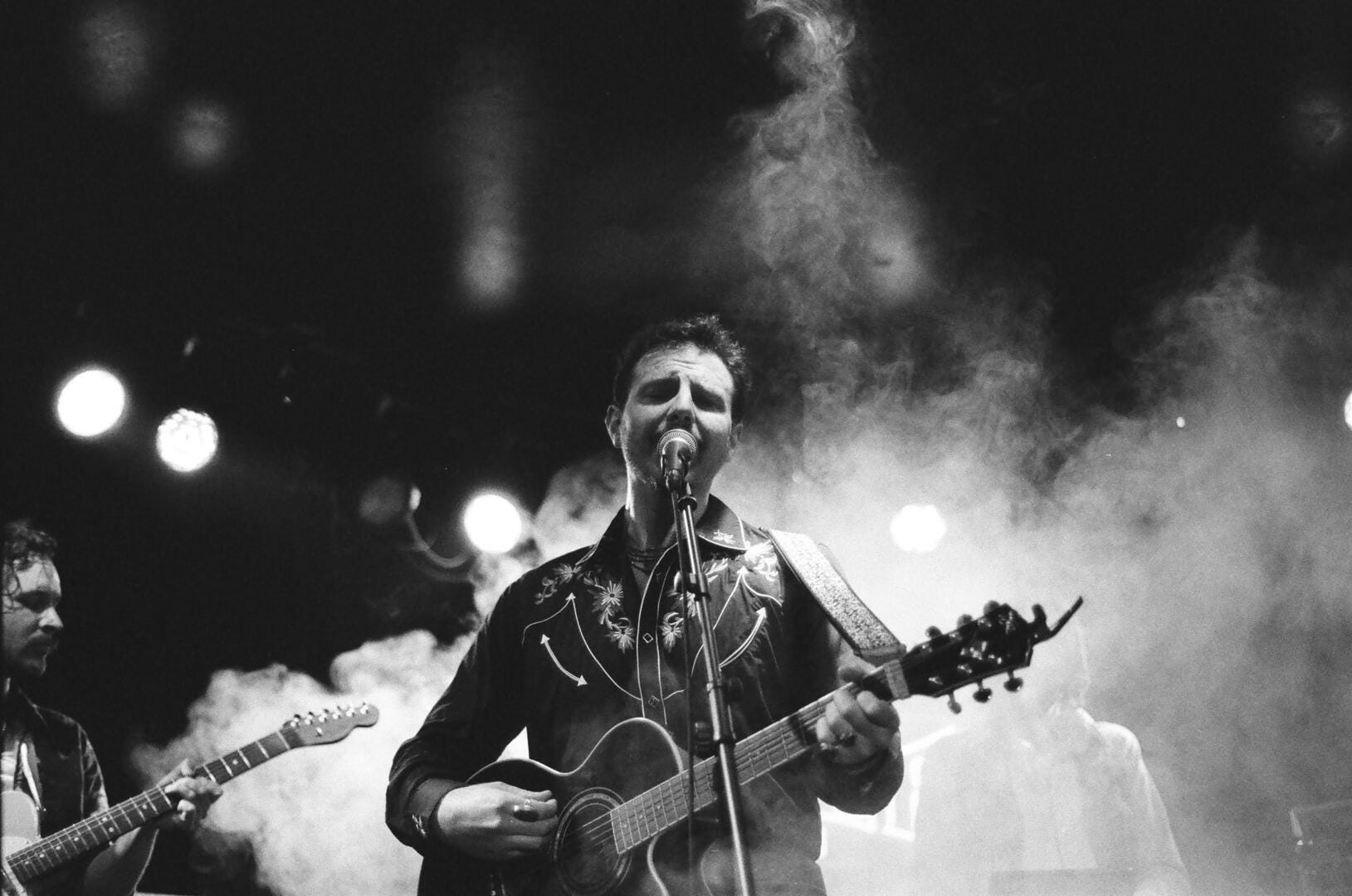
How does your music change in a live setting compared to the recorded versions?
AG: I live for live shows. My shows lean into raconteurism, plenty of banter and bits. I find interweaving stories and comedy amplifies the music. I experiment vocally during live performances, it makes every show different. When I’m playing with my band, The Maniac Orchestra, the songs take on a different energy. They start rockin’. It brings us to a really exciting level. We get to experiment with a retro, jam/psych rock sound alongside the folk lyricism. We always shoot to thrill. I dig what I’ve been discovering about the songs through that lens.
When someone comes to see you perform, what do you want them to leave thinking or feeling?
AG:I want them to leave feeling like they’ve seen something new, something different, something risky. I love performing so much, I get infected by the energy, I hope my audience gets wrapped up in it as well. The beauty of live performance is its imperfection, its unrepeatability. I want every show to be different. I want to discover something alongside the audience. I want my work to cut through commercialism; I don’t want it to be pop. I want it to be weird, warty, and human. I want the audience to feel more alive because of my show.
I also want them to think I’m handsome, charming, and talented. And I want them to Venmo me.
(I think that’s valid. You also don’t have to attend a live show to think August is handsome, charming, and talented, or to Venmo him. You could do all that now, you know.)
Is there anything else you’d like to add?
AG: Thank you for these thoughtful questions! I’ve appreciated the chance to dig deeper into my work. You can listen to The Golden West on all streaming platforms. To get a comprehensive view of my work, visit my website, www.AugustGladstone.com. You can follow me on Instagram @NormalAugust for updates on shows and releases, and TikTok @AugustGladstone for live clips and works in progress. I’ll have a book coming out early 2027, some Golden West vinyls this year, and another album on the way… thanks for your time!
And there we have it.
What makes The Golden West compelling isn’t just its imagery, but the way it holds contradiction without trying to resolve it. August Gladstone moves between tradition and reinvention, sincerity and absurdity, myth and real-time, lived experience, allowing each element to exist without forcing it into something simpler or more digestible. The result is a striking, uniquely creative, and thought-provoking project that invites listeners to sit within the tension over the course of several full listens.
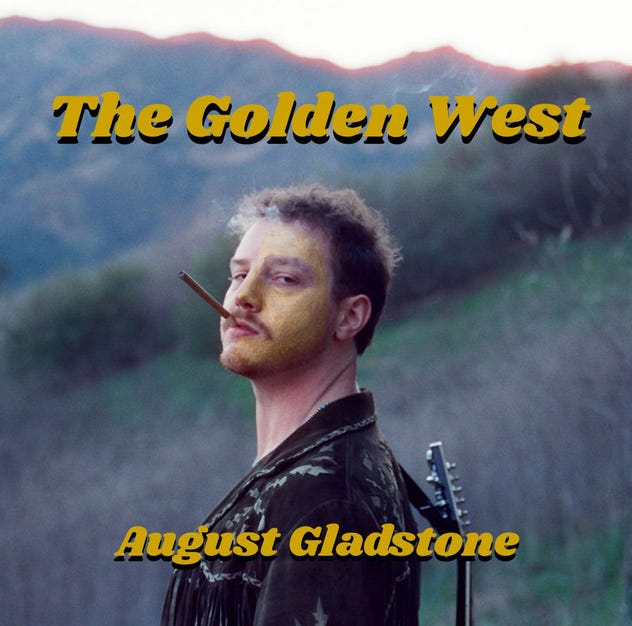
The Golden West by August Gladstone is out now across all major streaming platforms.
Connect with August Gladstone
⭐Artist Support⭐
- Join the Creative Spotlight – The Creative Spotlight series is a written interview series that highlights the stories, voices, and journeys of creatives. Want to be featured? Reach out!
- Join Are You Listening Yet? – I’ve been receiving a lot of incredible music and Creative Spotlight submissions lately. Love it! So, alongside full features, I’m also curating ongoing round-ups highlighting artists I’m listening to. If you’d like your work considered for that as well, feel free to mention it when you reach out.
- Narrative Writing & Creative Consultation – If you need an Artist Bio, EPK, Artist Brand & Identity Writing, World-building Assistance, Project, Release & Era Storytelling, Long-form Content, or any other form of narrative writing, check out my Narrative Writing Services!
- Fan Engagement Support – If you don’t feel connected to your audience, don’t have time to actually engage with them, or constantly release yet hear nothing but crickets when you do, then it sounds like you need to upgrade from having casual listeners who barely interact to having actual fans who are invested in you. I can help with that. Check out my Fan Engagement Services!
Community is important to me, and I’m always open to connecting with artists and music writers! Feel free to reach out any time, for any reason.
Thanks so much for reading!
Keep Reading


It was an honor to chat with you about The Golden West! Thank you for the thoughtful, interesting questions!
Thank you so much for your incredible body of work!